
SERVICE
SEO - ( Search Engine Optimization )
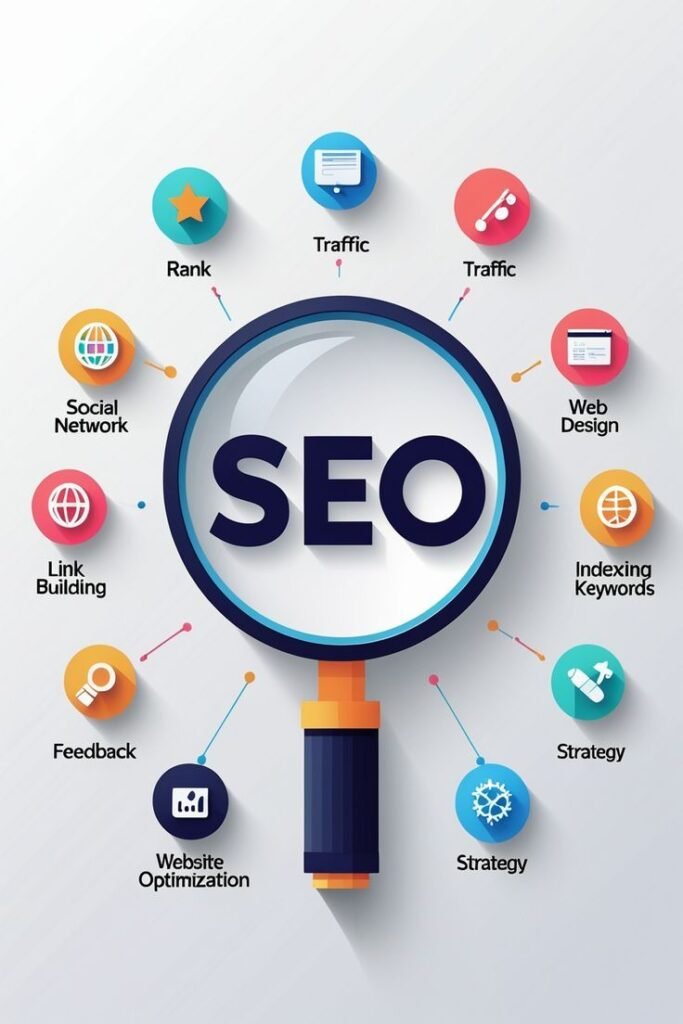
Search Engine Optimization (SEO) is the process of improving a website’s visibility on search engines like Google, Bing, and Yahoo to attract more organic (non-paid) traffic. It involves optimizing various elements of a website so that search engines can easily understand its content and rank it higher in search results. SEO includes both on-page and off-page techniques. On-page SEO focuses on optimizing content, keywords, meta tags, headings, images, and internal links to make pages relevant and user-friendly. Off-page SEO involves building backlinks, social signals, and online reputation to increase a website’s authority and trustworthiness. Technical SEO is another important aspect, which ensures that a website is fast, mobile-friendly, secure, and easy for search engines to crawl and index. Effective SEO helps businesses reach their target audience, improve brand awareness, and increase website traffic without spending on paid advertising. It also enhances user experience by providing valuable and relevant content. SEO is a continuous and evolving process because search engine algorithms frequently change. By following best practices and staying updated with trends, businesses can maintain strong online visibility and achieve long-term digital growth.
SEM ( SEARCH ENGINE MARKETING )
Search Engine Marketing (SEM) is a digital marketing strategy used to promote websites by increasing their visibility in search engine results pages through paid advertising. Platforms like Google Ads and Microsoft Advertising allow businesses to create targeted ads that appear when users search for specific keywords. SEM primarily focuses on Pay-Per-Click (PPC) advertising, where advertisers pay only when someone clicks on their ad. This makes it a cost-effective method to drive immediate traffic to a website. SEM involves keyword research, ad creation, bid management, and audience targeting to reach potential customers at the right time. Advertisers can set budgets, choose geographic locations, and target specific demographics to maximize campaign effectiveness. Ad formats may include text ads, display ads, shopping ads, and video ads. Performance tracking and analytics are essential in SEM, helping marketers measure clicks, impressions, conversions, and return on investment (ROI). Unlike SEO, which takes time to show results, SEM can generate quick visibility and instant traffic. However, it requires continuous monitoring and optimization to improve performance and reduce costs. A well-planned SEM strategy helps businesses increase brand awareness, generate leads, and achieve measurable growth in a competitive online environment.

SMM ( Social Media Marketing )
Social Media Marketing (SMM) is the use of social media platforms to promote products, services, or brands, connect with audiences, and achieve marketing goals. Platforms like Facebook, Instagram, Twitter, and LinkedIn play a key role in SMM strategies.
SMM involves creating and sharing content such as posts, images, videos, and stories to engage users. It also includes paid advertising, influencer collaborations, and community management. Businesses use SMM to increase brand awareness, drive website traffic, generate leads, and boost sales.
One major advantage of SMM is its ability to target specific audiences based on demographics, interests, and behavior. Analytics tools provided by these platforms help marketers measure performance and refine their strategies. Engagement—likes, comments, shares, and messages—is a crucial indicator of success.
However, SMM requires consistency, creativity, and understanding of audience preferences. Trends change quickly, so marketers must stay updated and adapt their content. When done effectively, social media marketing builds strong relationships with customers and enhances brand loyalty in a competitive digital landscape.
Email Marketing
Email marketing is a digital marketing strategy that involves sending emails to a targeted audience to promote products, services, or build relationships with customers. It is one of the most cost-effective and direct ways to communicate with potential and existing customers. Businesses use email marketing to share newsletters, promotional offers, product updates, and personalized content.
A successful email marketing campaign starts with building a quality email list of subscribers who have shown interest in the brand. Marketers then create engaging and relevant content that encourages users to open, read, and take action. Personalization, such as addressing recipients by name and recommending products based on their preferences, improves effectiveness.
Email marketing also allows businesses to track performance through metrics like open rates, click-through rates, and conversions. This helps in optimizing future campaigns. When done correctly, email marketing can increase brand awareness, drive website traffic, generate leads, and boost sales while maintaining strong customer relationships.

Content Marketing
Content marketing also involves careful planning and distribution to ensure that content reaches the right audience at the right time. A well-defined content strategy includes setting clear goals, identifying target personas, choosing appropriate channels, and creating a content calendar. This structured approach helps maintain consistency and ensures that each piece of content serves a purpose within the overall marketing funnel. Different stages of the buyer’s journey require different types of content. For example, awareness-stage content may include educational blog posts or social media updates, while consideration-stage content might involve case studies, webinars, or comparison guides. At the decision stage, testimonials, product demos, and detailed reviews can help convert prospects into customers. Repurposing content is another important aspect. A single blog post can be turned into a video, infographic, or series of social media posts, maximizing its value and reach. Additionally, storytelling and emotional connection play a significant role in making content memorable and shareable. Consistency and authenticity are key to success. Brands that regularly provide honest, helpful, and engaging content are more likely to build trust and long-term relationships. Over time, this not only drives traffic and conversions but also strengthens brand reputation in a competitive digital environment.